What is status of high quality cassava flour (HQCF) processing?
A 20% substitution of the national demand for wheat flour with cassava flour would require 240,000 tonnes of high quality cassava flour ( assuming the national demand for wheat flour is estimated at 1.2 million tones). Since one tonne of cassava flour is obtained from four tones of fresh cassava roots, the amount of roots necessary for the substitution is about one million tones. Because cassava production is primarily done on small farms scattered around the country, cassava flour processing should be done on small farm as possible to avoid transporting cassava roots over long distance. Also because of the difficulties of assembling large amounts of cassava roots, processing should be done on small scale of less than 10 tonnes per day. This implies setting up some 400 cassava flour processing factories.
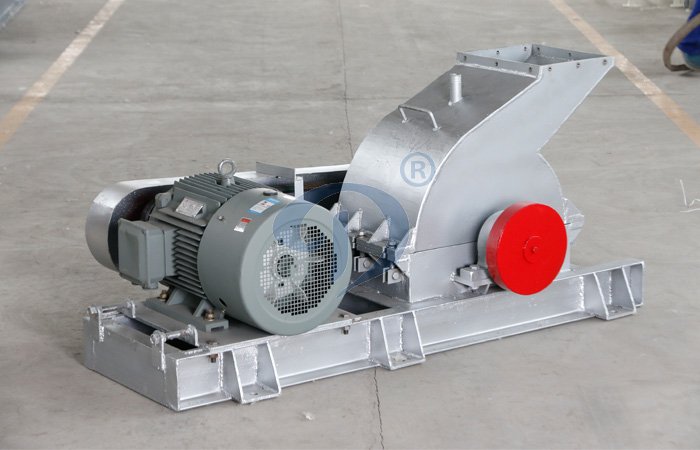
Cassava flour machinery
The prospect for high quality cassava flour (HQCF) processing in Nigeria was discussed during the Small Group Meeting based on a case study from Benue where the concept of using a mobile cassava processing unit was show cased highlighting the following :
(a)The importance of inter generational continuity in industrial innovation and entrepreneurship citing various family examples from Brazil and Okeke family.
(b)Cooperative approach to cassava business.
(c)Potential for modifying starch through R&D efforts, for example production of glucose from starch.
(d)A socio cultural commitment to promotion of use of gari(based on the use of cola nut as an example).
(e)The issue of quality standards-there is need to uphold this through endeavours such as ISO standardization and compliance with National Agency for food and Drug Administration and Control (NAFDAC) and Codex guidelines.
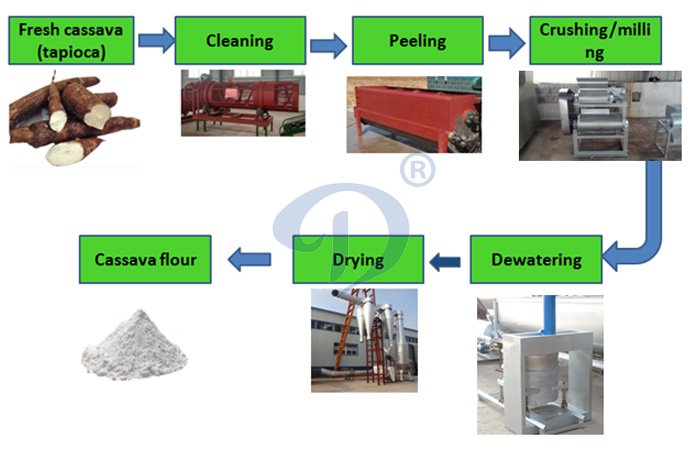
Cassava flour making machine
A number of challenges were pointed out as still hampering production of HQCF in Nigeria including the following.
(a)The critical need for machinery/equipment since local fabricators may not come up with the right equipment given the technical challenges/considerations they have to grapple with such as hydraulic press, pelletiser and peeler.
(b)The critical need to exploit use of cassava by products, for example manufacture of high fibre products for diabetics, soy-fortification, glue production, etc.
Leave a message about What is status of high quality cassava flour (HQCF) processing?